

Virtual Machine Backup and Recovery
Protect virtual machines across the widest range of hypervisors from one platform — VMware, Hyper-V, Proxmox VE, Nutanix AHV, Citrix Hypervisor, and more. Agentless, policy-driven backup and recovery under a single universal license, so adding or changing a hypervisor never means re-architecting how you protect it.
Key Highlights

The widest hypervisor coverage
VMware, Hyper-V, Proxmox VE, Nutanix AHV, Citrix Hypervisor, XCP-ng, oVirt, Oracle Linux VM, Scale Computing, VergeOS, OpenShift Virtualization, and SUSE Virtualization (Harvester) — protected from one console.
Agentless by design
VM-level backups run through each hypervisor's native API — no in-guest agents to deploy or maintain across the fleet. (Hyper-V is the one documented exception, using a lightweight host agent.)

One universal license
Every supported hypervisor under a single license model — per host, per VM, or per TB. Add or switch platforms without new SKUs or a re-architecture.

Recovery that's tested, not assumed
Recovery Plans define what recovers and where; scheduled recovery testing proves your VMs come back before you need them to.
Virtual machine protection, built for many hypervisors
VM-level agentless backup
Full and incremental backups through the hypervisor's native API, application-consistent where the platform supports it — no agent sprawl inside guests.
Block-level incremental backups
Change block tracking transfers only changed blocks, shrinking backup windows and storage footprint for large, fast-growing VM estates.
Coverage for KubeVirt platforms
VM-based platforms built on Kubernetes — OpenShift Virtualization and SUSE Virtualization (Harvester) — protected through the Kubernetes integration, alongside traditional hypervisors under the same license.
Recovery Plans and one-click DR
Orchestrate recovery of grouped workloads in a single action, and run scheduled recovery tests so disaster recovery is proven rather than promised.
Immutability and air-gap
Object Lock, Retention Lock, IsoLayer air-gap, AES encryption, and Keycloak MFA protect the backup layer against tampering and ransomware.
Cross-platform recovery and V2V migration
Restore VMs across hypervisors – VMware, Citrix Hypervisor, or XCP-ng workloads to OpenStack using the same backups.
Flexible backup destinations
Local filesystem, NFS/CIFS, S3-compatible object storage, tape, and deduplication appliances — plus a proxy/independent backup server for integration with legacy backup systems.
HTML5 UI, CLI, and REST API
Manage from an intuitive web interface, script through the CLI, or automate with a documented REST API. Multi-tenancy and RBAC for shared and service-provider environments.
One license across the estate
Consistent licensing — per host, per VM, or per TB — whether you run a single hypervisor or ten.
Technology partners






Our Interactive Architecture
Whether you manage infrastructure, automate deployments, or lead IT strategy, Storware works the way you work.

Click any category to expand · Click a solution for details & demo booking
One platform. Every hypervisor. One license.
Enterprise estates are multi-hypervisor by design — and shifting, as teams move off legacy platforms onto Proxmox, Nutanix, OpenShift Virtualization, or SUSE Virtualization. Protecting each with a different tool multiplies cost, policy drift, and coverage gaps.

The fragmentation problem
A tool per hypervisor means separate policies, separate consoles, and separate licenses — and inconsistent protection exactly where environments meet.
The single-platform answer
Storware protects every supported hypervisor from one console, under one license, with the same policies, immutability, and recovery workflow across all of them.
No re-architecture when you change
Add a hypervisor, migrate between them, or consolidate — your protection model stays the same. The platform absorbs the change instead of forcing a rebuild.
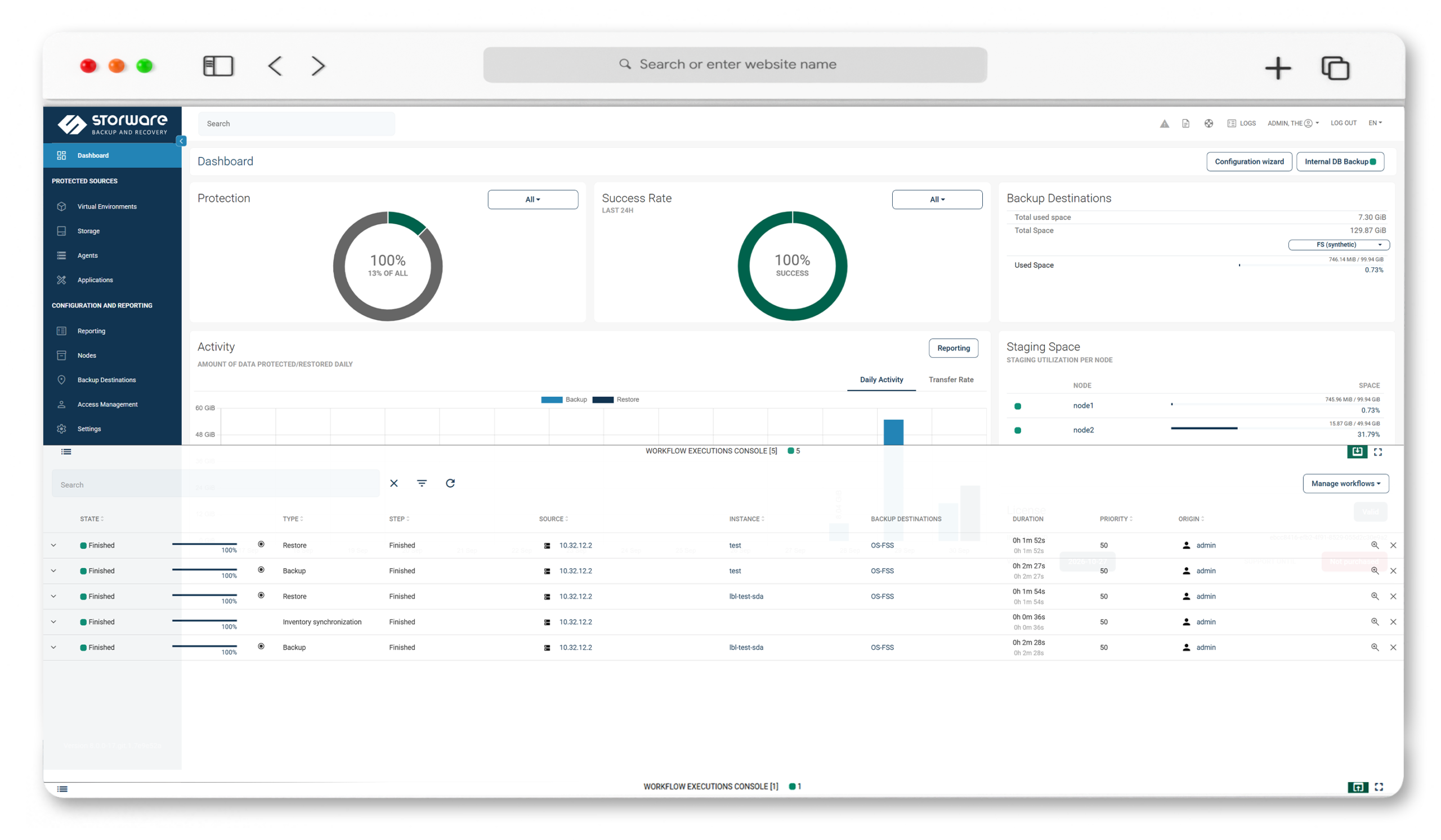
Storware Backup and Recovery — platform overview
See agentless VM backup, Recovery Plans, and immutable destinations across a multi-hypervisor estate in one platform.
Frequently Asked Questions
Which hypervisors does Storware back up?
VMware, Microsoft Hyper-V, Proxmox VE, Nutanix AHV, Citrix Hypervisor, XCP-ng, oVirt, Oracle Linux VM, Scale Computing, VergeOS, OpenShift Virtualization, and SUSE Virtualization (Harvester) — all under one universal license.
Is Storware agentless?
Yes. VM-level backups run through each hypervisor’s native API, so there are no in-guest agents to deploy or maintain. Hyper-V is the one documented exception, using a lightweight host agent.
Does one license cover all the hypervisors?
Yes. A single universal license covers every supported hypervisor, priced per host, per VM, or per TB — with no per-platform add-ons.
Do you support Kubernetes-based VM platforms like Harvester?
Yes. SUSE Virtualization (Harvester) and OpenShift Virtualization run KubeVirt VMs on Kubernetes, and Storware protects both through its Kubernetes integration — under the same license as traditional hypervisors.
Can I recover a VM to a different hypervisor?
Yes. Storware supports cross-platform recovery – VMware, Citrix Hypervisor, or XCP-ng VMs to OpenStack from the same backups.
How does Storware handle disaster recovery for VMs?
Recovery Plans define what recovers, from which backup, and where; one-click execution runs the plan in a single action. Scheduled recovery testing verifies recoverability in advance.
What backup destinations are supported?
Local filesystem, NFS/CIFS shares, S3-compatible object storage, tape, and deduplication appliances — with the option of a proxy or independent backup server for legacy backup systems.
Does Storware also protect containers?
Yes — container environments are protected under the same platform and license. See Container Backup and Recovery for the dedicated coverage.
How is licensing structured?
Consistently: per host, per VM, or per TB. The model stays the same whether you protect one hypervisor or your entire multi-hypervisor estate
Is Red Hat Virtualization (RHV) still supported?
RHV is deprecated following the platform’s end of life. Existing RHV environments remain supported after upgrading from earlier product versions, ensuring continuity for current deployments. oVirt remains supported.